P1: Portable Exhibition
"The ideal gallery subtracts from the artwork all cues that interfere with the fact that it is “art.” The work is isolated from everything that would detract from its own evaluation of itself... So powerful are the perceptual fields of force within this chamber that, once outside it, art can lapse into secular status—and conversely. Things become art in a space where powerful ideas about art focus on them."
– Inside the White Cube: Notes on the Gallery Space, Part I, Brian O'Doherty
Organizing graphic design exhibitions is always problematic: graphic design does not exist in a vacuum, and the walls of the exhibition space effectively isolate the work of design from the real world. Placing a book, a music album, or a poster in a gallery removes it from the cultural, commercial, and historical context without which the work cannot be understood. The entire raison d’être of the work is lost as a side effect of losing the context of the work, and the result is frozen appearance stripped of meaning, liveliness and dynamism of use. Presenting design in an exhibition space in this way is akin to looking at a collection of stuffed birds in order to study how they fly and sing. In spite of this, it is more and more common to see design as ‘object’, not only in books and magazines, but also in the ‘white cube’ of the exhibition space.
— Graphic Design in the White Cube, Peter Biľak
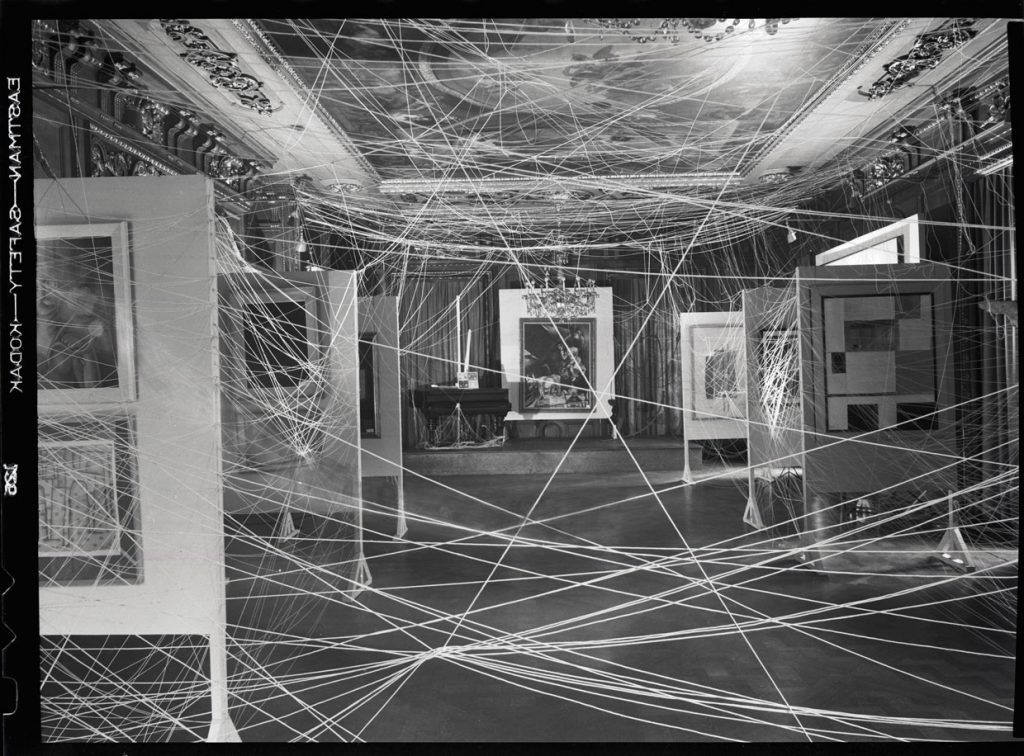
Mile of String, Marcel Duchamp
Exhibitions take many forms, but we most likely associate them with a "white cube" format – the empty room which intends to elevate its contents by sealing them in an art space and removing them from the context which surrounds our daily lives. Brian O'Doherty famously connected the events which led to the popularization and proliferation of this space. While also tracing the limitations of overly-simplifying art spaces into the white-cube – citing how Surrealism, Conceptual Art, and other art movements continuously reoriented our understanding of where art can live and art's relationship to the gallery space.
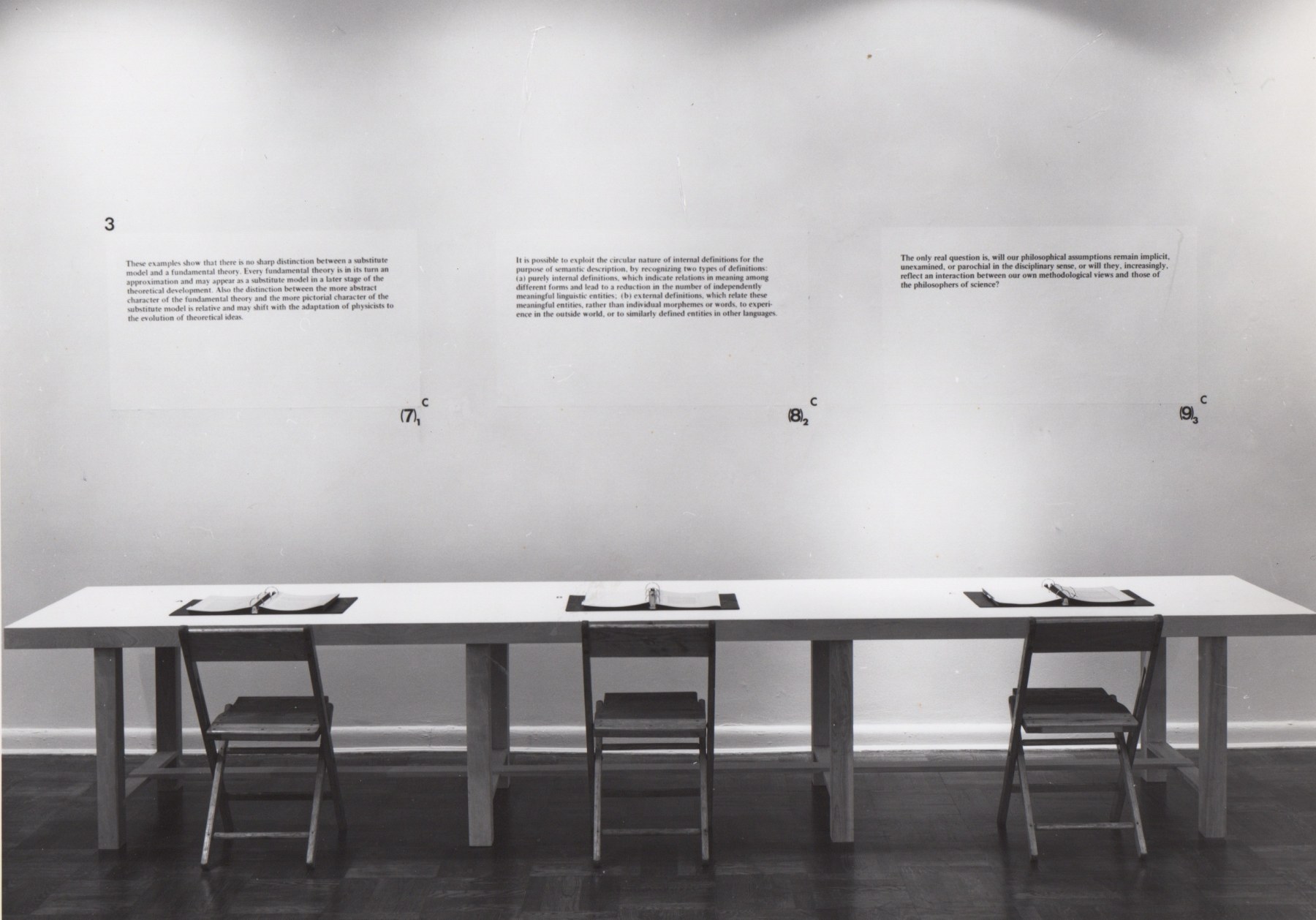
The Ninth Investigation, Proposition One, Joseph Kosuth
When considering graphic design as an exhibition subject, the "white cube" poses additional problems. Design is often defined in the negative in its comparison to art, with many people seeing the primary distinction being one of "practical" use. Regardless of your adherence to this definition, graphic design certainly thrives in circulation as a device for communication. What then is an appropriate graphic design work to exhibit in the "white cube"? And how can we retain its impact when removed from its ideal environment? Furthermore, what are the pressures to exhibit design in this format, and how may we push against them?
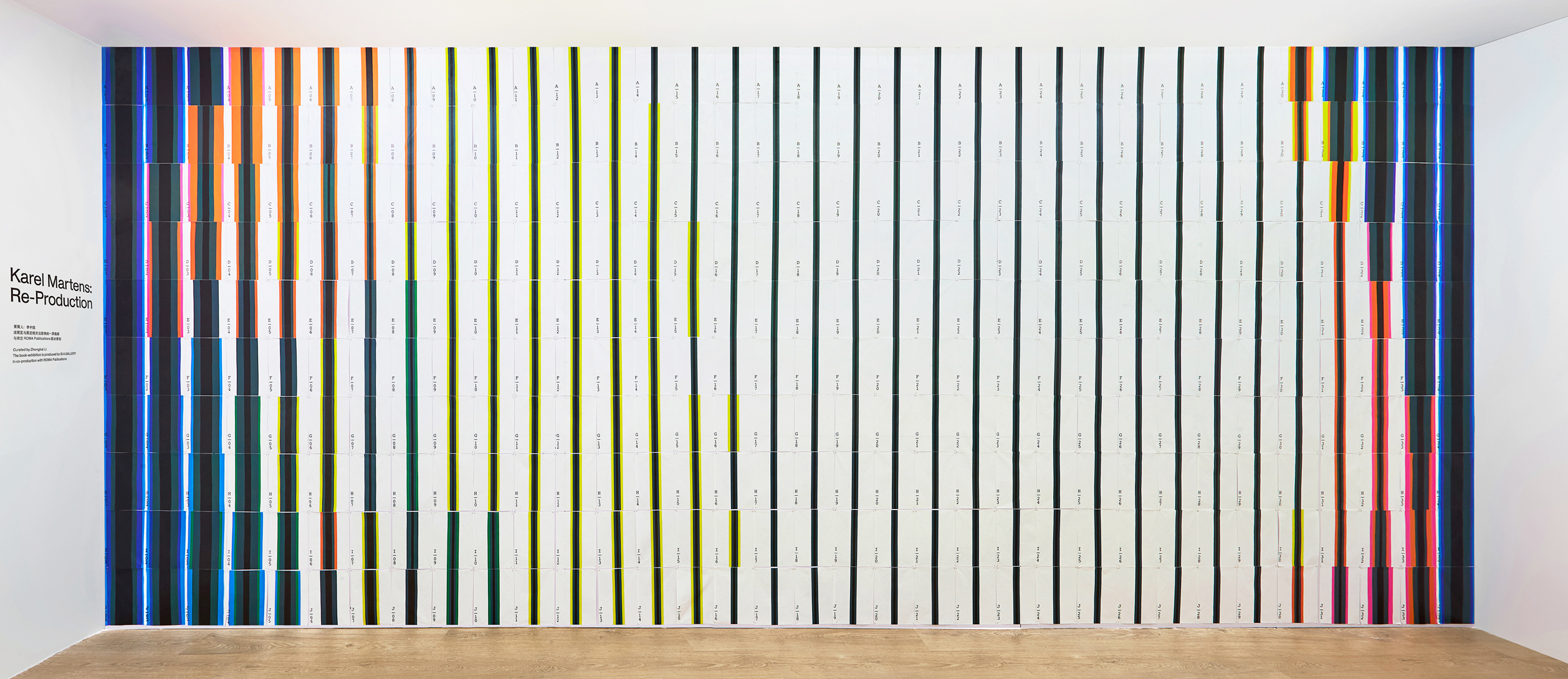
Re-Production, Karel Martens
To examine these contradictions, we'll work in small groups to make a series of a portable exhibitions. These exhibitions will first be shown in a vitrine (which we will build during the semester and house in the building 49 lobby), then travel to destinations yet to be determined.
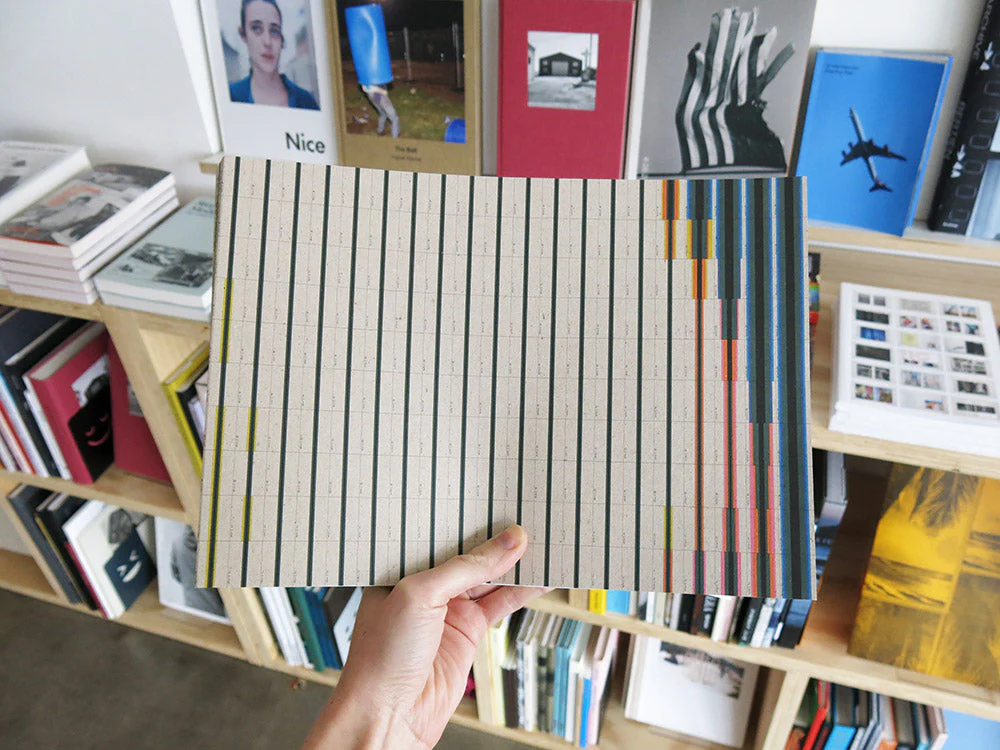
Uranus, Karel Martens
Your exhibition should fit within a 480 × 360 × 340mm box, but can take many forms – it could be housed in a bag, reformatted to become a booklet that gets deconstructed and reconstructed, made infinitely small and consist only of digital files on a flash drive... It's up to you! However, your projects should consider the role of circulation in graphic design, Graphic design in an exhibition context, and be optimized for display within a vitrine (and the surrounding space).
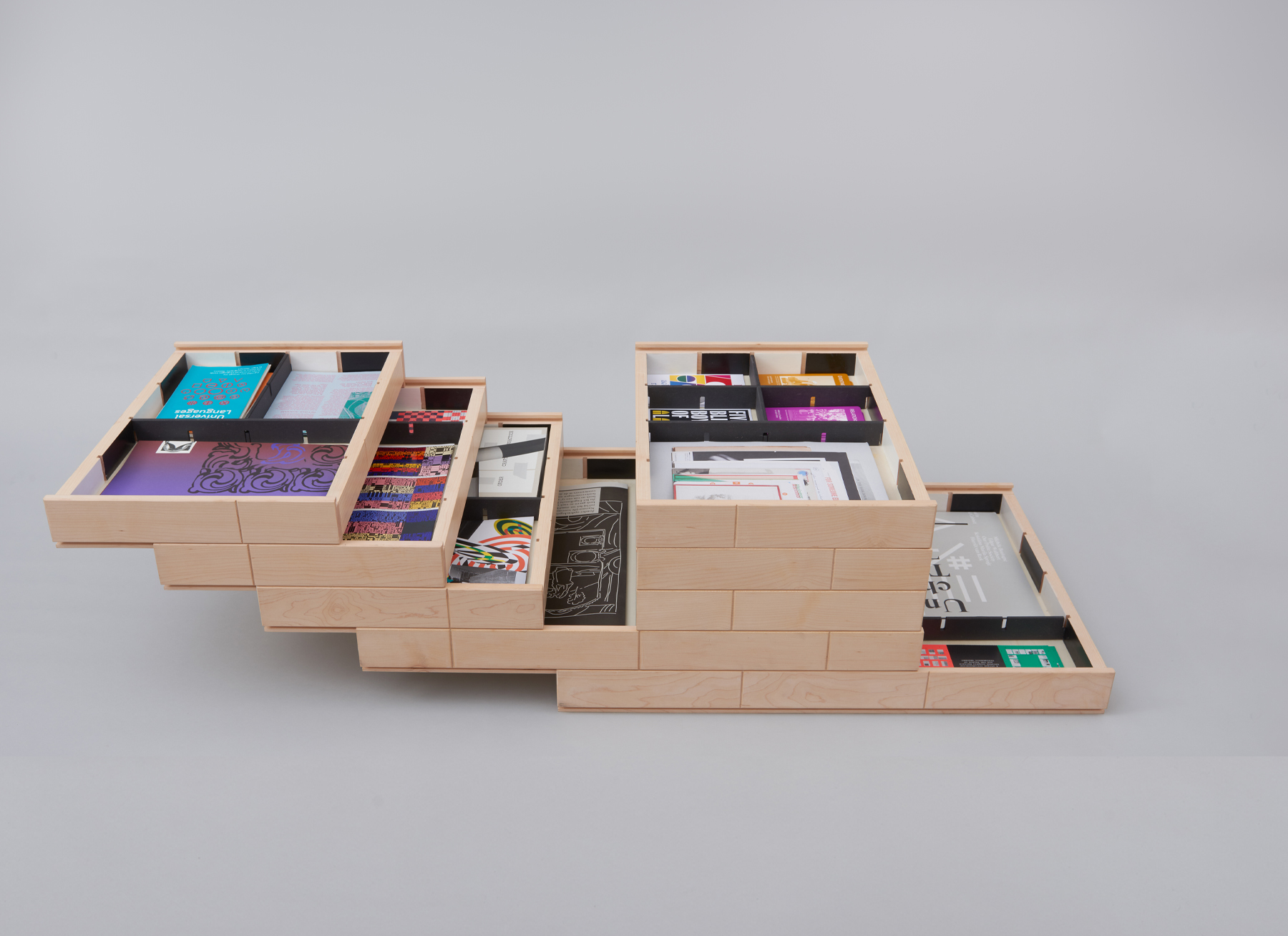
building·blocks, Richard Niessen
We'll form small groups to work with practicing graphic designers to create exhibitions of their work. This semester we'll be working with Laura Coombs, Maki Suzuki, and Min Guhong Manufacturing. Each designer has a unique relationship to exhibitions, and has unique opportunities and challenges in presenting their work in a vitrine and portable format.
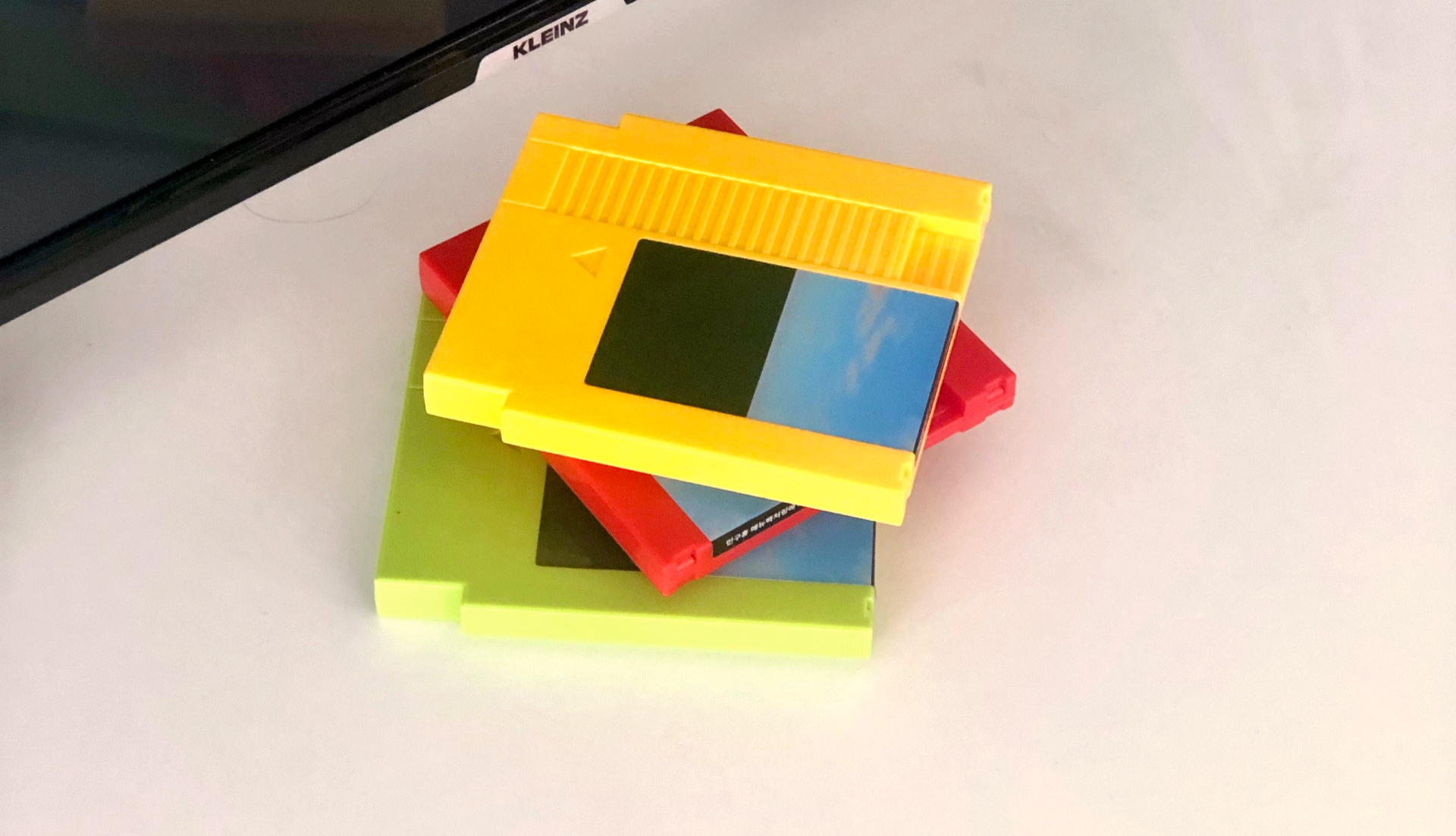
Welcome to Min Guhong Manufacturing, Min Guhong Manufacturing
You will be in direct contact with these designers to create their shows, and have limited access / opportunities to communicate with them. As such, do thorough research and in order to take maximum advantage of your conversations with them!
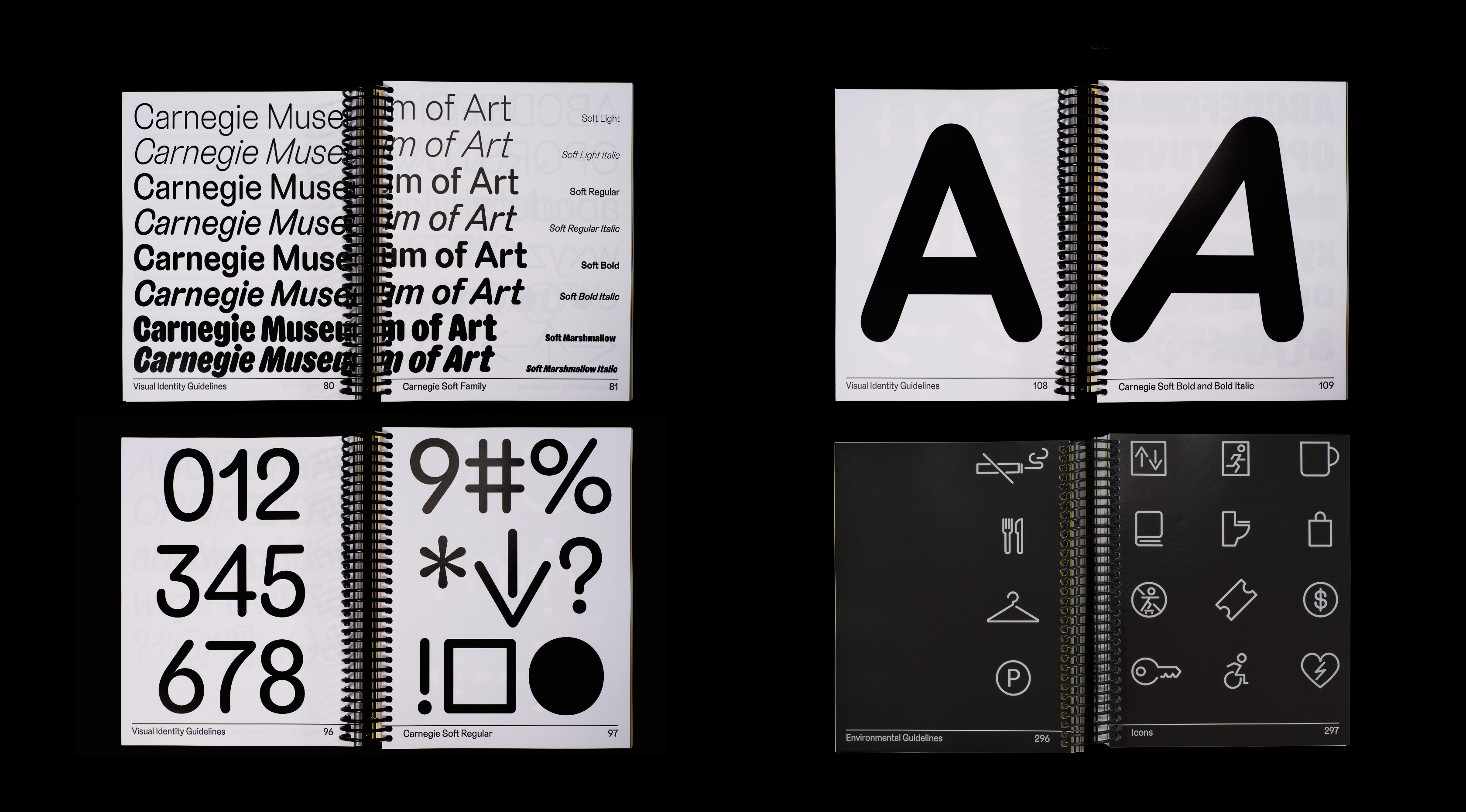
Carnegie Museum of Art Identity, Laura Coombs
These exhibitions will be shown on a staggered schedule near the end of the semester in the Building 49 lobby. After which, we will develop a plan to circulate and share them in other context. Concurrent to the development of the portable shows, we will also create the vitrine to house them.
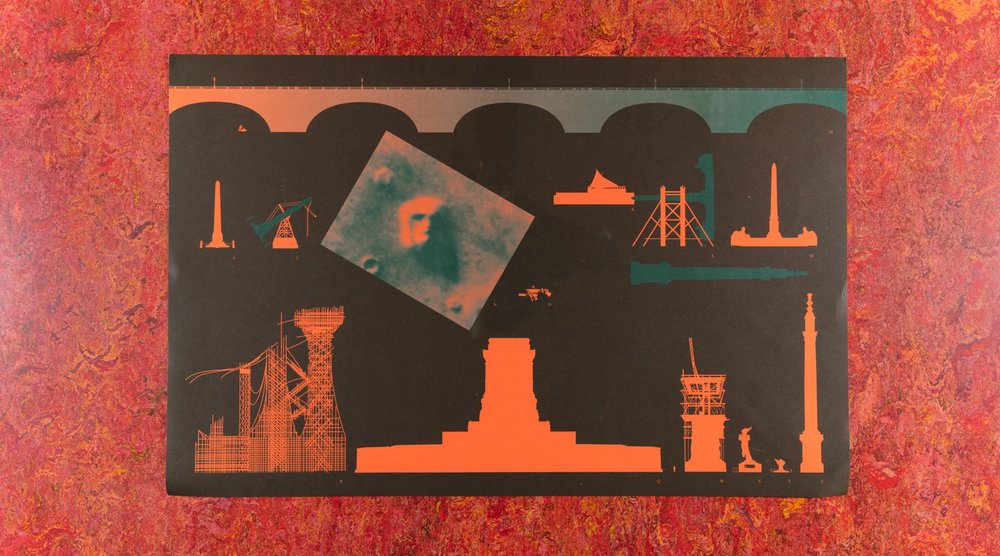
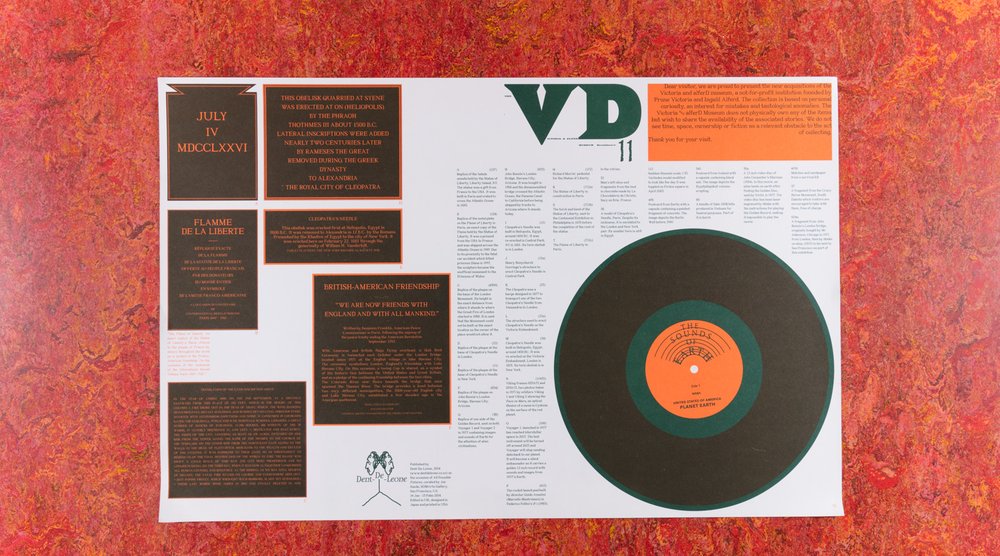
Victoria and alFerd Museum No. 11, Åbäke
Furthermore, this project will help us research our other semester long project – a group exhibition we curate to take place in the SNU Powerplant between June 4 and June 10.

Due: Apr 30, May 14, May 28
Learning Outcomes
- Expanded perspective on Exhibition Design and non-traditional exhibit-making
- Developing a curatorial outlook
- Non-traditional publication experience
- Experience with 3d design of simple furniture
Requirements
- A portable exhibition about a contemporary designer
- That can be contained in a 480 × 360 × 340mm vessel
- Including a tabletop show in the building 49 library
- Takeaway featuring the list of items in the show, and describing your curatorial intent
Think of this as an exhibition you'd encounter in a museum or gallery, and consider all components of such a show. This should include (but is not limited to): graphic identity, curatorial statement, takeway, spatial graphics and design, etc.
Kickoff: Mar 5
Project Introduction
Group-discussion about portable exhibitions project.
Step 2: Mar 12
Mini-presentations
Within the class session split into groups and research one of the exhibition subjects. Create a short presentation about their work (~7 mins) to share with the class. We'll then create our own ranked choice lists of the exhibition subjects we want to work with. Send Chris your preference of subject by EOD Thurs Mar 13 via Kakaotalk. Chris will create groups by Friday Mar 14.
Step 3: Due Mar 26
Portable Concepts
After contacting your exhibition subject (except for Maki who is busy through early April), create 2 concepts for your portable exhibition. Each concept should include a list of works you are interested in exhibiting, their display format (both in the vitrine and their portable formats), and reference imagery.
Step 4: Due Apr 9
Portable Proposal
Refine your concept and select your final direction. Share your final direction, including: portable format (box, flashdrive, bag, website, etc.), works list, graphic identity, takeaway sketch, and any other components important for us to understand your idea. Begin working with your exhibition subject to collect the included works and any additional information you'll need in order to create your portable show.
Step 5: Due Apr 30, May 14, May 28
Portable Exhibition Launch
Launch your exhibition in the Design building 49 lobby!
The show schedule is as follows:
Apr 30 – Laura Coombs
May 14 – Min Guhong Manufacturing
May 28– Maki Suzuki
Schedule
Week 1 – Mar 5
Project kickoff

Week 2 – Mar 12
Step 2: mini-presentations
on exhibition subjects

Week 4 – Mar 26
Step 3 Due: Portable Concepts
Vitrine design confirmed

Week 6 – Apr 9
Step 4 Due: Portable Proposal
Fabrication of vitrine

Week 9, Week 11, Week 13
May 14, May 28, June 11
Launch exhibitions

Post exhibition
Make a plan on where to share them next...
Reading
- Exhibit A: The Exhibitionary Apparatus by Andrew Blauvelt
- Graphic Design in the White Cube by Peter Biľak
- Inside the White Cube: Notes on the Gallery Space, Part I by Brian O’Doherty
- Inside the White Cube, Part II: The Eye and the Spectator by Brian O’Doherty
- Inside the White Cube, Part III: Context as Content by Brian O’Doherty
Exhibition Subjects

Laura Coombs
"Laura Coombs is a graphic designer in New York—designing visual identities, websites, and publications in collaboration with institutions, artists, architects, and publishers. Recent collaborators include MIT Press, Verso Books, Park Books, Columbia Books on Architecture and the City, Carnegie Museum of Art, Lisson Gallery, and David Kordansky Gallery. Since 2017, she has been head of design at the New Museum of Contemporary Art in New York City, including its technology affiliates New Inc and Rhizome." – The Cooper Union
Website: Laura Coombs ↗
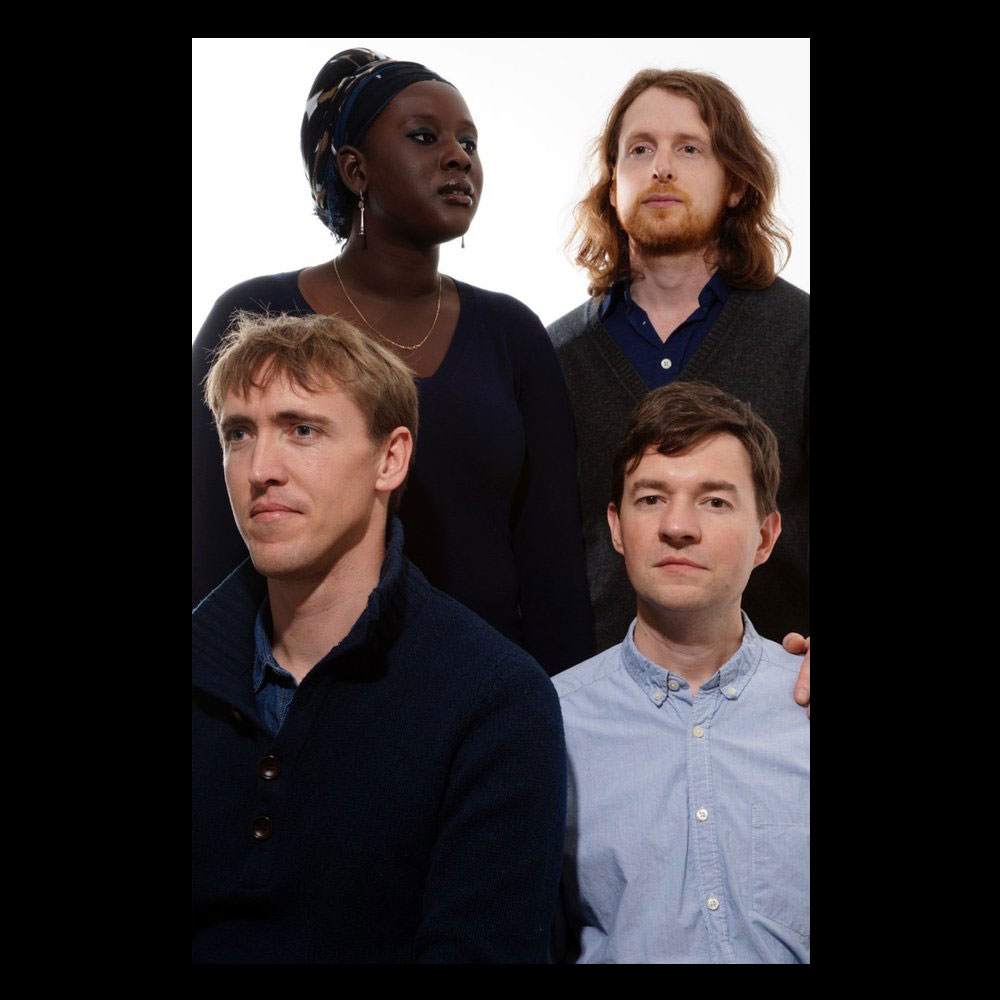
åbäke (Maki Suzuki)
"åbäke is a graphic design collective founded in London, UK by Patrick Lacey (UK), Benjamin Reichen (France), Kajsa Ståhl (Sweden), and Maki Suzuki (France), who met at the Royal College of Art. Since its early days, åbäke has been active in the contemporary art world, creating independent, cross-disciplinary, and participatory projects that raise the question of how graphics become a form of cultural communication and address the social aspects of design and the power that collaboration can bring to a project.
åbäke's work has ranged in many fields, such as architecture (Sexymachinery), cuisine (Social Pasta, Trattoria), publishing (Dent-de-Léone), spy agency (Affice Suzuki), and clothing and record label (Kitsuné). Moreover, they have done many collaborations with artists (Ryan Gander, Francis Upritchard, Per Hüttner, Johanna Billing, Fritz Haeg, etc.), institutions/organizations (NMNM, Design Museum, Victoria and Albert Museum, Museum of Finnish Architecture, Serpentine Gallery, CASCO, etc.), musicians (The Cardigans, Daft Punk, etc.), designers (Maison Martin Margiela, Hussein Chalayan, Peter Jensen, Martino Gamper, etc.) around the world.
They also reflect on the cultural stories of place and the mechanisms of art and create storytelling objects and texts." – Clear Gallery Tokyo
"Portfolio": åbäke (Maki Suzuki) ↗
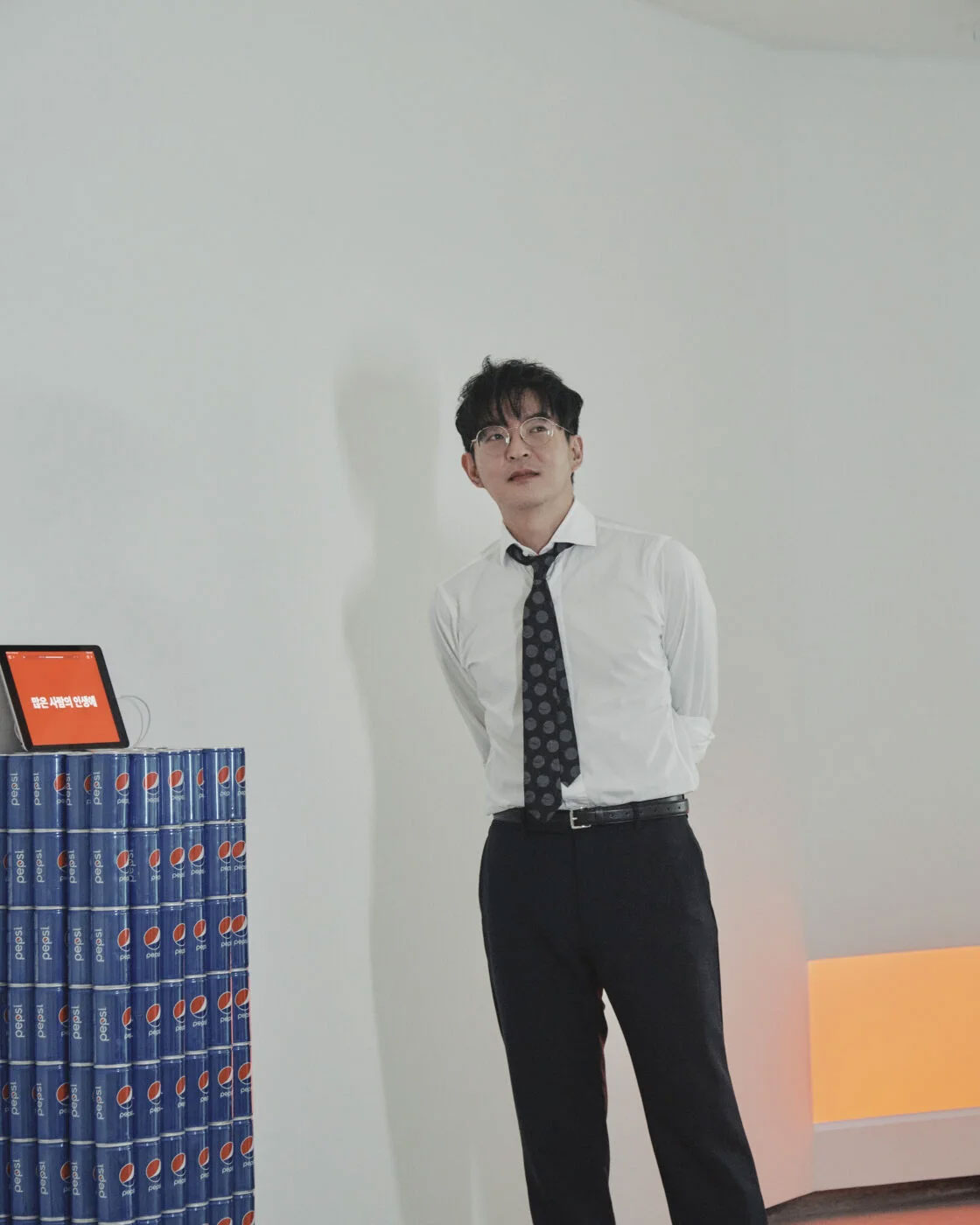
"Min Guhong is the owner of Min Guhong Manufacturing, a parasitic and one-man company based in Seoul. The company has made products in its spare time since 2015. In addition to interests including industry, business, economy, and poetry, the company likes exploring the world wide web because it’s easy to publish and easy to access. And most importantly, the web is the last thing many people see before they fall asleep." — The Creative Independent
Website: Min Guhong Manufacturing ↗
References
- All the Knives: Any Printed Story on Request by Åbäke
- Kelly 1:1 by Experimental Jetset
- The Showroom by Na Kim
- ORGD by Jieun Yang
- ORGD 2024: Good Designer by Goeun Park and Jieun Yang
- ORGD 2020: Optimal Performance Zone by Jieun Yang and Tissue Office
- Four Basic Kinds of Lines and Colour by Sol Lewitt
- Uranus by Karel Martens
- Karel Martens: Re-Production Curated by Zhongkai Li
- The Victoria and Alferd museum by Åbäke
- Collections of Collections by Mariah Nielson, Åbäke and Thomas Bush
- Nests by Richard Niessen
- Graphic Matters / The Palace of Typographic Masonry by Richard Niessen
- Toolbox / The Palace of Typographic Masonry by Richard Niessen